What?
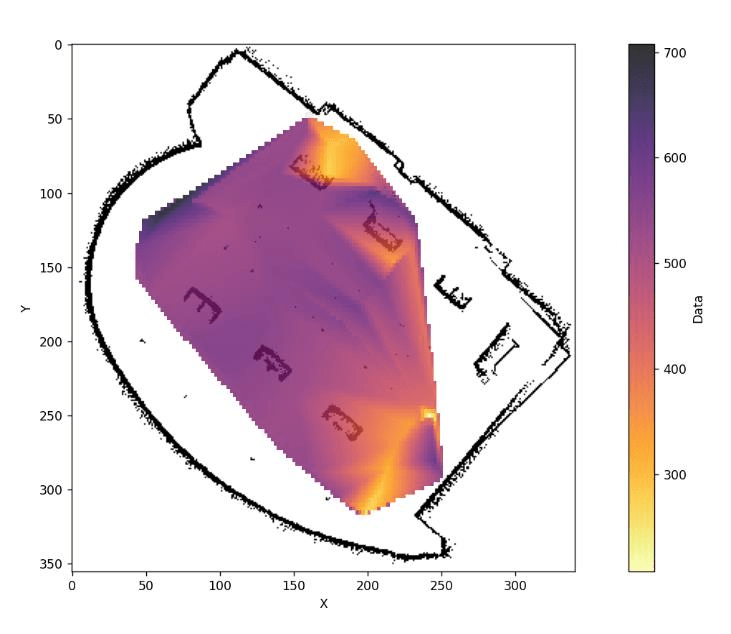
The robot presented is an advanced air quality monitoring robot. It is equipped with various technologies to perform its primary function. The robot utilizes an Arduino Nano for enhanced safety and redundancy, and it’s enclosed in a 3D-printed shell for protection and aesthetics. Key features include remote control for initial mapping, Simultaneous Localization and Mapping (SLAM) for creating detailed indoor maps, and AMCL localization for precise navigation within these maps. Additionally, it employs Navigation 2 for efficient pathfinding and obstacle avoidance, and a specialized ROS2 package for collecting and analyzing CO2 data, outputting this information as a heat map. The robot also integrates a safety system comprising SHARP sensors, lights, and a speaker to alert nearby individuals of its presence.
How?
Hardware Integration: The core of the robot’s functionality lies in its hardware components. An Arduino Nano was integrated for reading co2 data and monitoring SHARP data for redundant obstacle detection. The robot also features a LiDAR for mapping, a Raspberry Pi for processing and control, and an Arduino Uno for running PID velocity control. These components were carefully selected and configured to work in harmony, providing the necessary tools for air quality monitoring and autonomous navigation.
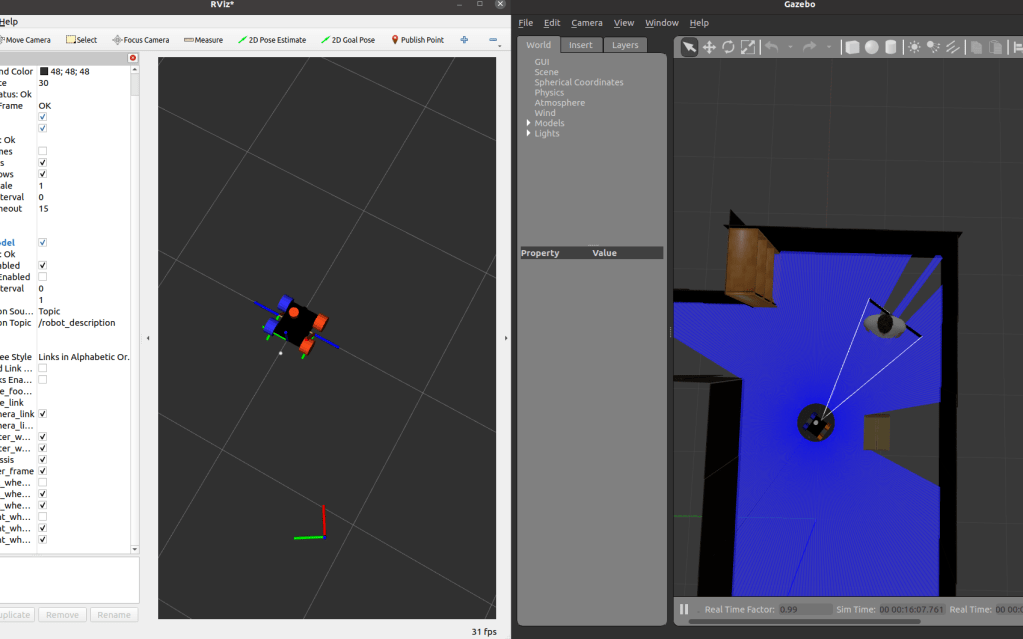
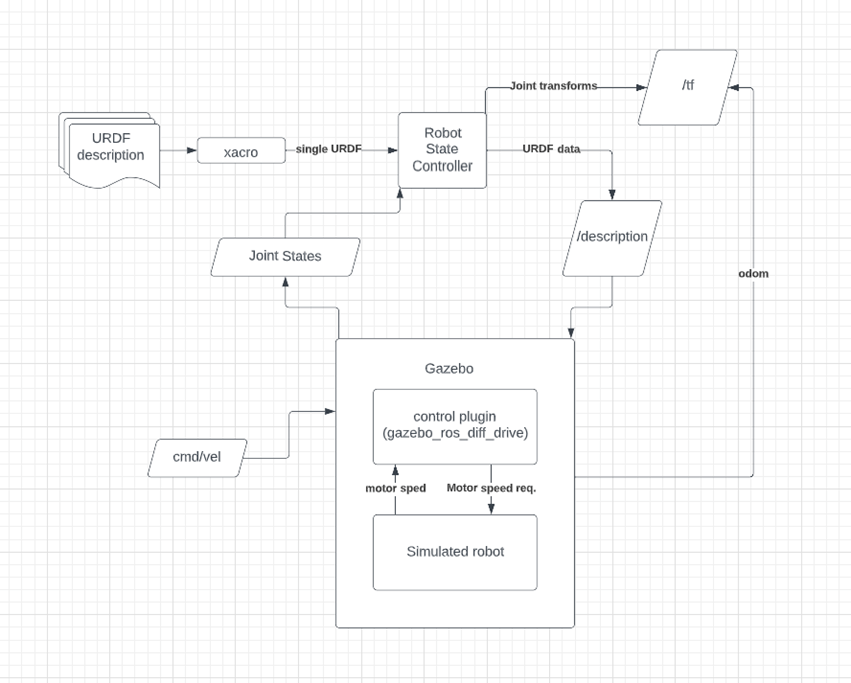
Software Development: Simulation was crucial in our software development process. I used Gazebo with ROS2 to test controls, mapping, and navigation, ensuring a smooth integration later on. After successfully running the simulation without issues, I transitioned to the real robot. This step involved replacing the Gazebo component with the physical robot and setting up a ROS2-Arduino bridge via serial connection. This bridge was essential for sending skid steer wheel velocities and receiving CO2 data from the robot.
Why?
The development of this air quality monitoring robot is underpinned by the critical need to ensure public health, particularly in office buildings where people spend significant portions of their day. The primary reason for focusing on CO2 monitoring and the promotion of airflow is twofold:
Health Implications of Elevated CO2 Levels: Elevated levels of carbon dioxide (CO2) in indoor environments can lead to various health issues, including headaches, dizziness, restlessness, difficulty concentrating, and even long-term health effects. In office settings, where numerous individuals share a confined space, the risk of CO2 buildup is high, especially in inadequately ventilated areas. By monitoring CO2 levels, the robot helps in identifying areas where air quality is poor, enabling corrective measures to be taken.
 My Robotics Projects